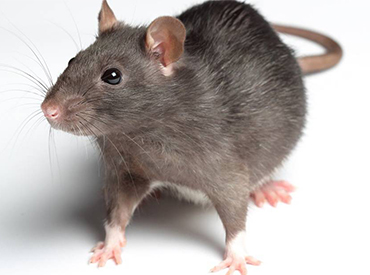
The Roof Rat is medium in size and pitch black in colour and is also known as ship rat and roof rat. They are excellent climbers and use their scaly tails which are longer than their bodies for acrobatic balance. Due to their outstanding climbing skills, they prefer nesting above the ground, especially in the attics, voids in the roof, service areas and ceilings. If you hear gnawing or scratching noises in the attic, you know it is due to the presence of a family of root rats. These rats can cause food poisoning due to their droppings, contaminating vessels and grains in the kitchen and storage area. Roof Rats could bite humans and pets in defence which may cause Rat-bite fever..
| Common name | Roof Rat |
|---|---|
| Scientific name | Rattus Rattus |
| Weight | Appx 150-250 grams |
| Length | Head and body approximate 15 to 22 cm |
| Tail length | 18 to 25 cm |
| Droppings | Scattered, spindle or banana-shaped, approximate 2.2 cm long |
| Sexual maturity | 2-3 months |
| Habitat | They live walls, attics, vines and trees |
| Life span | Around 9-12 months |
LIFE CYCLE:Female Roof Rats give birth to 7-8 young ones after a gestation period of 23-24 days. Roof Rats are born in a nest, in a litter of 7-8 young ones. The nest is often in a secure place with nesting debris such as in an attic in the insulation. Roof Rat’s new born babies are bright and only weigh 6-8 grams. Their eyes and ear canals are sealed, tiny and hairless (pinkies) with eyes sealed shut with a relatively short tail. By the 6th day they are starting to get some peach fuzz hair, their developed coats are really starting to come through by about the 9 day. They open their eyes after 10 to 16 days. By the18th day, they are practicing washing. They are at the super cute balls-of-fluff stage. The babies are eating a variety of foods. By the 25th day, they are starting to grow very quickly and they spend their waking hours playing. By the 28th day mom is in the process of weaning them. By the 35th day they are continuing to grow very quickly and can begin to notice a size difference between the males and the females. By the 42th day the babies are well developed, completely weaned and are ready to go out. Generally, they have sleeker bodies with a narrow snout, pointed nuzzle and bigger ears and longer scaly tail that are long enough to be pulled over its eyes. Roof Rat’s colour is black or brown back, white, cream or grey belly. Roof Rats are growing up to 15-22 cm long and the tail of the Roof Rat is about 18-25 cm on average. The tail is larger than the body. Adult Roof Rat’s body weight, on average, is up to 150 to 250 gms. The average lifespan of Roof Rat is about 9-12 months.