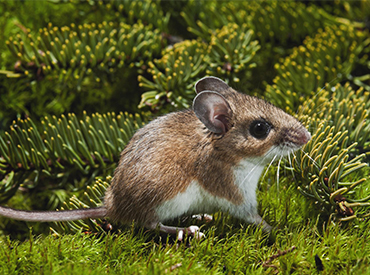
Deer Mouse are usually found in woodlands, grasslands and cultivated fields, but can easily build their nests around buildings and home gardens. They carry bacteria and viruses which are deadly to human beings and pets.
| Common name | Deer Mouse |
|---|---|
| Scientific name | Peromyscus Maniculatus |
| Weight | Approximate 10 to 24 grams |
| Length | Head and body approximate 1 to 22 cm |
| Tail length | 4.5 to 10 cm |
| Droppings | Smooth with pointed ends, approximate 3 to 6mm long |
| Sexual maturity | 30-60 days |
| Habitat | They inhabit woodland ecosystems, grasslands, alpine regions, cultivated fields, brush lands and will even enter and nest in buildings and homes. |
| Life span | 1-5years |
LIFE CYCLE:The young deer mouse is tiny, appx 1 or 2 grams at birth. The litter size increases until the fifth or sixth litter and then declines. Deer mice become sexually mature at five or six weeks of age. A female deer mouse can have up to eleven litters of one to nine young ones in a year. The average gestation time for each litter is 24 days. They are weaned in four weeks and then capable of reproducing in just after a week. An adult’s body is only 3 or 4 inches long and the head and body are approximate 12 to 22 cm big. They have a length of approximate 4.5 to 10 cm. The droppings are smooth with pointed ends, approximate 3 to 6 mm long. The name “deer mouse” comes from their color resembles that a deer. These Mouse is very small size, a tawny brown back, a white underbelly, and white legs and tails. Their colorations resemble that of the white-tailed deer. They have hind legs that are longer than the forelegs, large eyes, Slender body, large ears, and long, thin tails. They can live up to Five years in captivity but probably only live about a year in the wild.